
Third test: wet wipes, with the rejects hidden among good packs
After the hoses, printed packaging. We showed the system only good packs, then mixed the defective ones in without saying which. It found them. And our lab is a much harder place than a real machine will be.
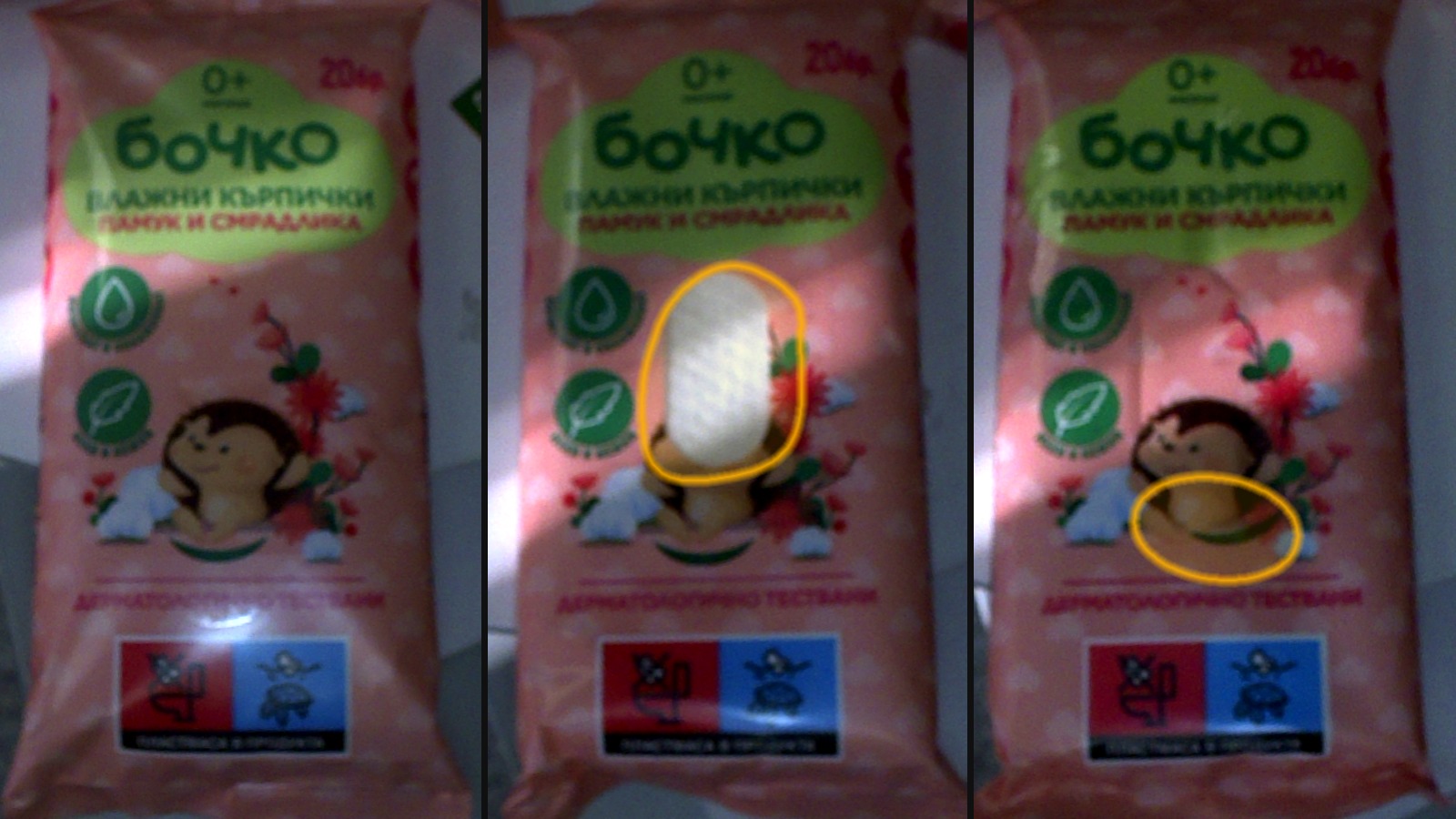
After two tests with hoses (the first and the second) we wanted to try something completely different: packs of wet wipes. Glossy film, creases, reflections and busy artwork full of small details. Here "normal" never looks the same twice. Move the pack a little and the crease and the glare are already different.
For classic machine vision this is a hard job. Every rule has to tell a crease from a defect, and the creases are different every time.
We were looking for three kinds of defect: a foreign patch on the print, an element of the artwork that is not where it should be, and a badly crushed pack.
What we did
We put the packs on the rotary table, with the Hikrobot camera looking down from above. We deliberately did not place them precisely. Each one lies at a slightly different angle and slightly off to the side, the way they would arrive on a conveyor.
We showed the system only good packs. We rearranged them several times, and each time the creases and reflections on the film were different. That is how it learned that a new tilt, a new crease or a new reflection is not a defect. A defect is only something no good pack ever had.
The blind test
Then the colleague who arranged the table put the defective packs among the good ones. Where, they did not tell us. This is what the camera saw:
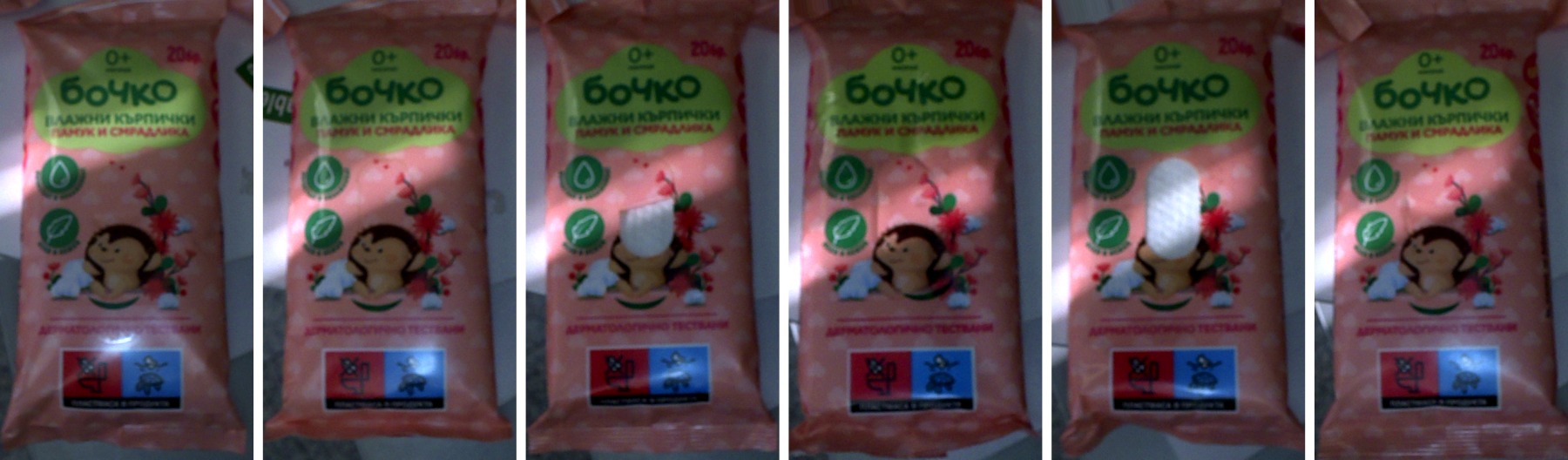
Have a go yourself before you look at the next picture.
And this is what the system marked:
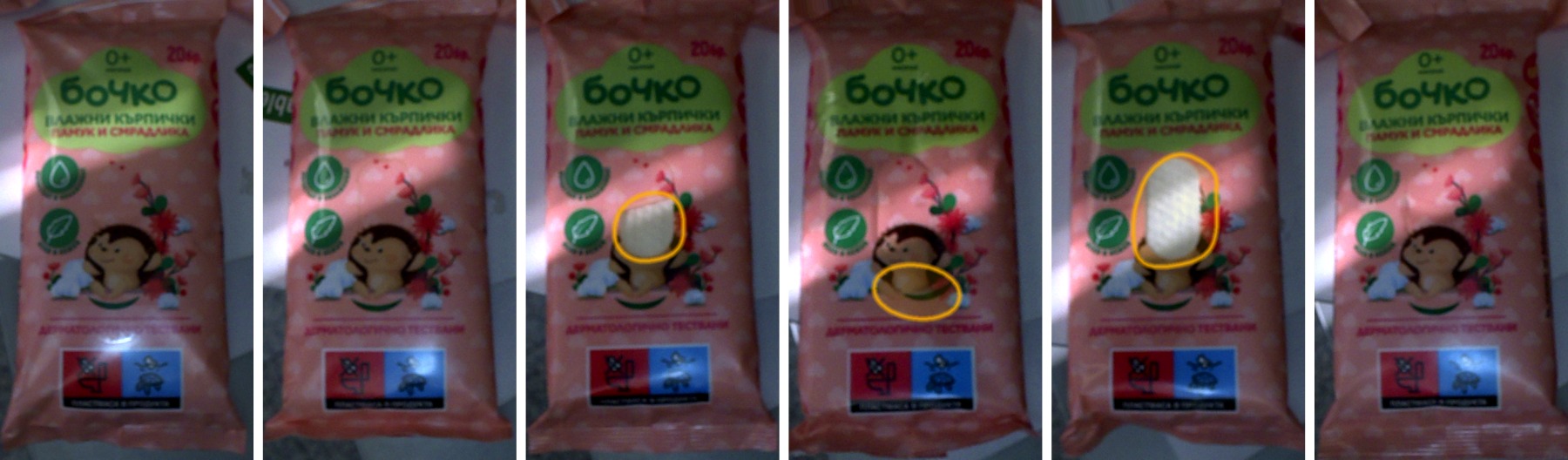
It picked out exactly the defective ones and let the good ones through. The white patches are caught at once. The smile is the more interesting one.
The smile
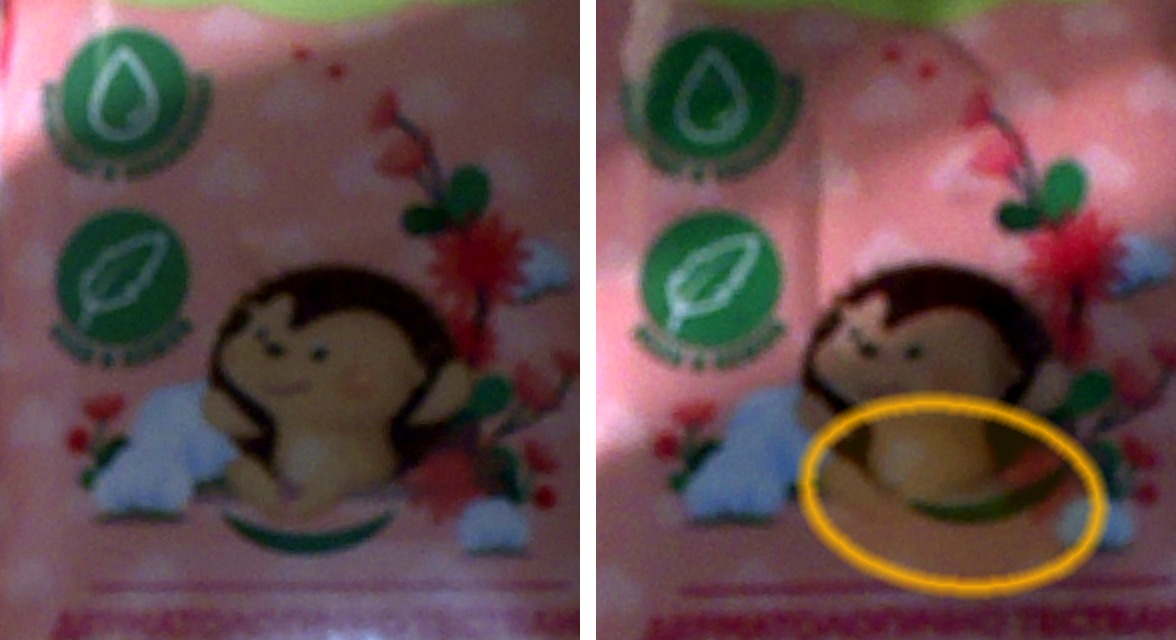
Under the hedgehog there is a small green arc, a smile. On one of the packs it is printed, but rotated and shifted. If you only look for "something different", it does not catch your eye: normal green print, just not where it belongs.
So we added a check that the smile sits where it should relative to marks that are always in the same place. The two green icons on the left cannot move relative to each other, so they serve as a reference. Measured against them, the misplaced smile is plain to see. The same kind of check can be put on any print element that matters to the customer.
The crushed pack was not in the blind test; we tried it in an earlier round. The system flagged it too: its creases lit up, because they look like nothing it had seen on the good packs.
A lab is not a machine
To be honest, our setup is far from perfect. During the test the sun came in through the window and the light kept changing. The camera is on a movable stand, and people were walking around the table. Instead of a conveyor we have a rotary table, and the packs lie however they land.
None of this will be there in a real machine. The camera is fixed, the lighting is its own and enclosed, and the packs travel on a conveyor with guides. That is why we expect it to work even better there.
One more thing. There were only a few packs on the table, and the system had seen the good ones in the blind test before, in other arrangements. On a line we will train it on many more good packs than we had here.
If you have printed packaging where defects are hard to describe with rules, get in touch. We will try it with your packs.